

Description
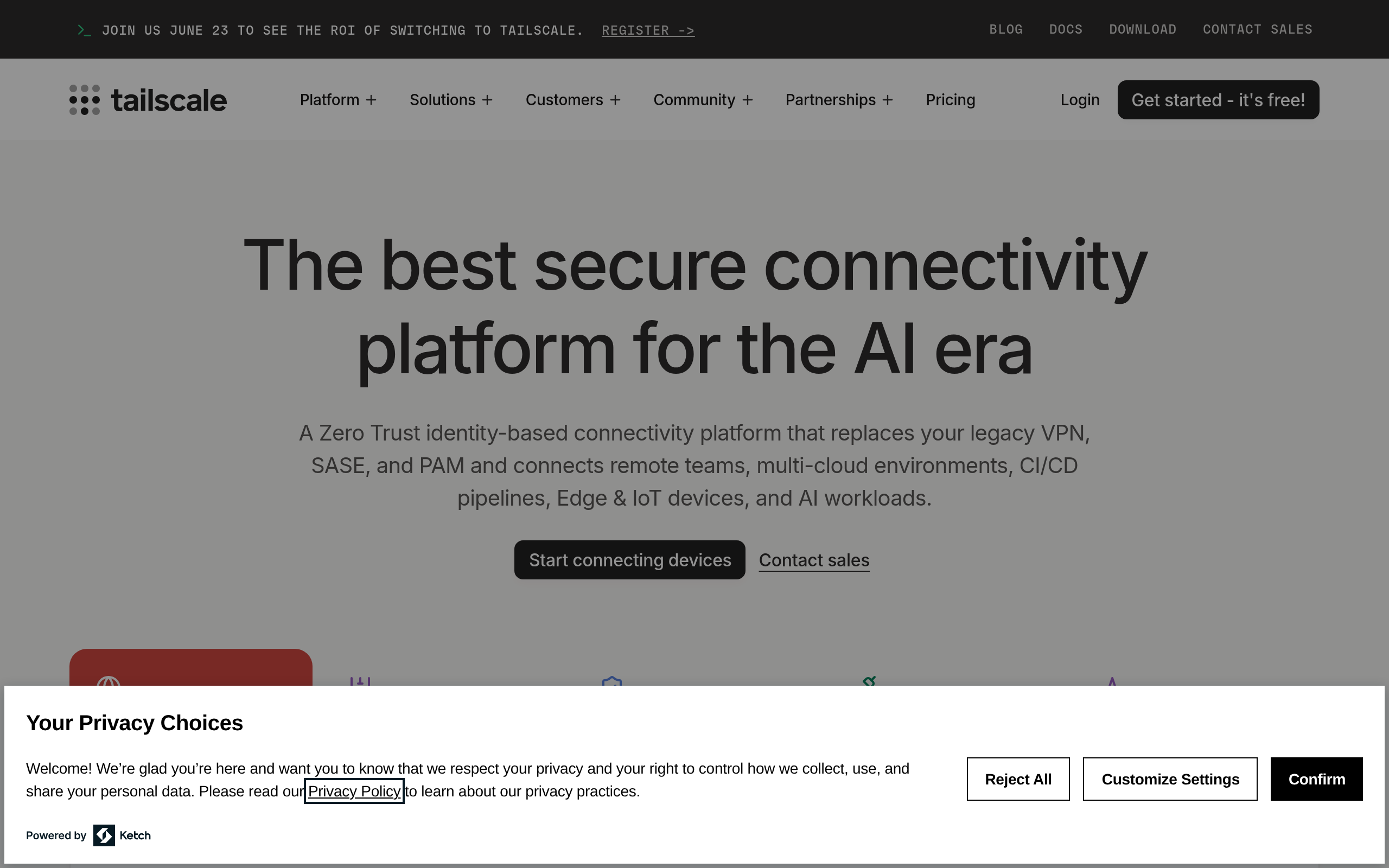
Tailscale is a Zero Trust identity-based connectivity platform for developers, IT, and security teams. Built on the WireGuard® protocol, it creates a peer-to-peer mesh network (called a tailnet) that connects devices and services securely across any infrastructure.
Key Features
- Mesh VPN — Direct peer-to-peer WireGuard connections for low-latency, encrypted communication between all nodes
- Zero Trust Access Control — Identity-based ACLs enforce least-privilege access with RBAC policies, GitOps workflows, and on-demand access
- Multi-Platform — Works on Windows, macOS, Linux, iOS, Android, plus Kubernetes, NAS, and cloud providers
- SSO & IdP Integration — Authenticate via Okta, Google Workspace, Microsoft Entra ID, or custom OIDC providers
- Infrastructure Access — Direct SSH, database, and Kubernetes access without bastion hosts or jump boxes
- Tailscale SSH — Brokered SSH without managing keys, with optional session recording
- Monitoring — Network flow logs, audit logs, and SIEM integrations for full visibility
Use Cases
Business VPN for remote teams, multi-cloud connectivity, CI/CD networking, AI workload access, Edge & IoT management, Kubernetes networking, and homelab setups. Over 100 integrations available, trusted by 30,000+ businesses including Instacart, Cribl, Duolingo, and Hugging Face.
Highlights
Pros
- Uses WireGuard-based peer-to-peer mesh networking for low-latency encrypted connections between devices without routing traffic through centralized servers
- Setup takes minutes — install the client, sign in with an existing SSO identity provider (Google, Microsoft, Okta, GitHub, Apple), and devices auto-discover each other
- Handles NAT traversal and works through restrictive networks, firewalls, and double NAT automatically using a fallback relay network (DERP)
- Core client is open-source, enabling independent security auditing, and the company fixed a reported RCE vulnerability within hours according to the researcher
- Zero Trust model with identity-based ACLs enforces least-privilege access down to the IP and port level, verified via third-party security audits
Cons
- Windows and Linux client apps require manual updates rather than auto-updating, potentially leaving devices on outdated versions
- Relies on Tailscale's proprietary coordination servers — if those servers are unavailable, new devices cannot be added to the network
- Headquartered in Canada (5 Eyes Alliance member) and logs device hardware type, hostname, and IP addresses on its coordination server
- Advanced ACL configuration requires editing a JSON file, which demands technical expertise beyond what casual users may have
- Customer support is limited to email only (no live chat or phone), with initial responses taking up to two business days for normal-priority issues